
by Robert Buccigrossi, TCG CTO
Successful AI adoption requires intentional management. While many theories exist on how to drive AI adoption, DORA’s latest research utilized Bayesian analysis to isolate the specific strategies that actually impact team incorporation of AI.
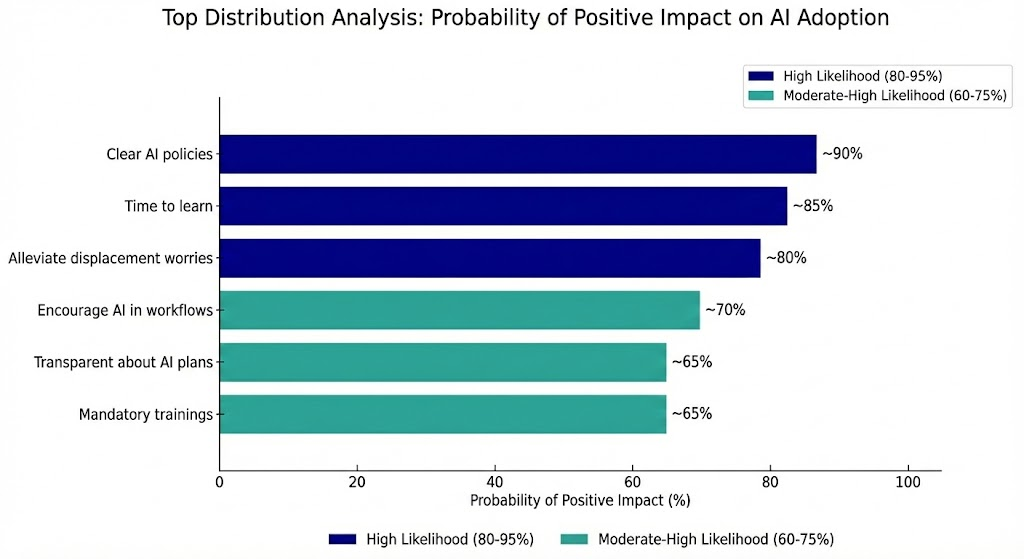
The following five practices are ranked by their statistical impact on successful AI adoption.
I. Clear AI Policies
This is the single strongest driver of AI adoption. DORA found that organizations with clear AI acceptable-use policies saw a 451% increase in adoption compared to those without.
Developers often hesitate to use AI due to fear of leaking proprietary data or violating compliance rules. A lack of policy is viewed as risk, not freedom. We must provide explicit guidelines on:
- Which tools are approved for a project’s use.
- What data classification levels are safe for AI prompts.
- How to handle AI-generated code (licensing and attribution).
II. Time to Learn
Simply providing access to tools is insufficient. DORA data indicates that giving developers dedicated time during work hours to experiment with AI leads to a 131% increase in team adoption. Our projects will need to allocate specific time for “AI deep-dives” and experimentation outside of standard sprint deliverables.
III. Alleviate Displacement Worries
Fear is a massive blocker. Organizations that actively address concerns about job displacement see 125% higher adoption.
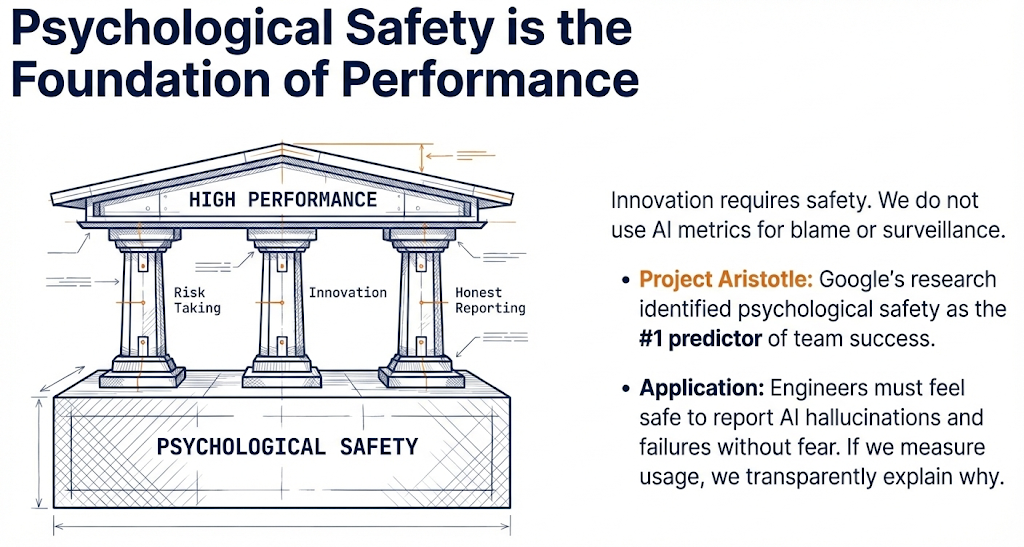
We must explicitly frame AI as a force multiplier, not a replacement. Our goal is to remove toil and augment human capability. If engineers fear that efficiency gains will lead to staff reductions, they will rationally resist using the tools. We are adopting AI to handle increasing workload complexity, not to reduce headcount.
IV. Encourage AI in Workflows
Passive availability does not drive usage. Leadership must actively encourage the integration of AI into daily workflows.
This goes beyond writing code. We should encourage the use of AI for:
- Summarizing documentation.
- Drafting test cases.
- Explaining legacy codebases.
- Brainstorming architecture.
V. Be Transparent about AI Plans
Transparency builds trust. Organizations that openly communicate their AI strategy and goals see higher trust and adoption rates. This includes:
- Which tools we are piloting.
- How projects measure success.
- Our long-term vision for AI-assisted engineering at TCG.
Keeping the “why” and “how” transparent reduces anxiety and prevents the rumor mill from filling the void.
Summary
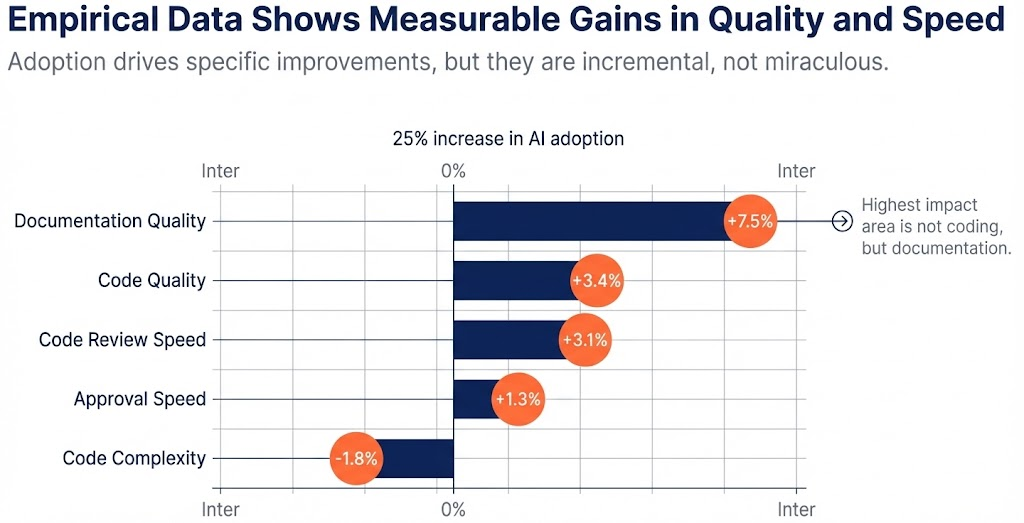
The transition to AI-assisted engineering is inevitable, but success is not guaranteed. It requires maintaining our engineering discipline (specifically regarding batch sizes) while implementing the specific management practices that drive safe adoption: clear policies, dedicated learning time, and psychological safety.